


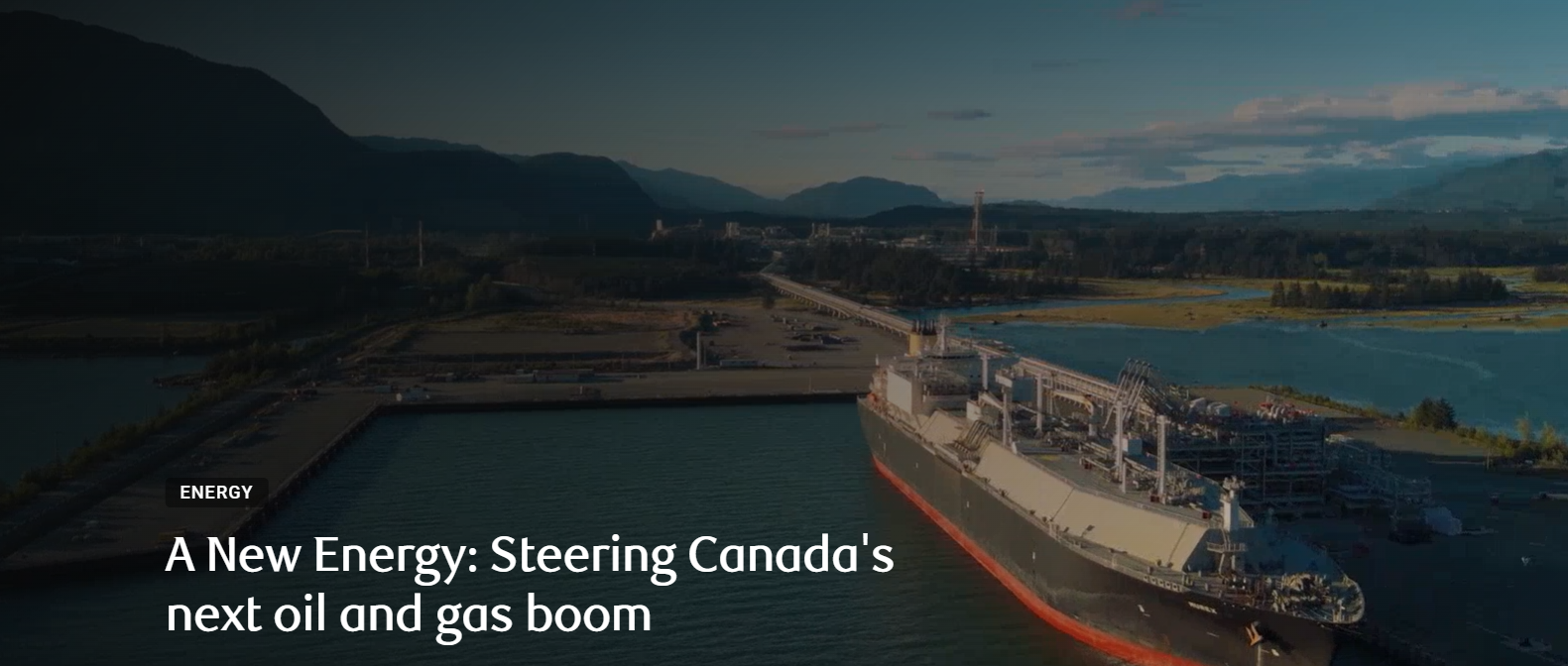
RBC Report: A New Energy: Steering Canada's next oil and gas boom -Web image
TORONTO — Canada could be on the verge of an oil and gas construction boom worth more than $200 billion through 2040, with Alberta potentially adding more than 52,000 permanent jobs, according to a new RBC Thought Leadership report.
The report says a wave of proposed pipelines, liquefied natural gas facilities, oilsands expansions and carbon capture projects could drive the largest period of energy construction Canada has seen since the 2006-14 oilsands boom.
In RBC’s high-growth scenario, Canadian oil production could increase by almost two million barrels per day by 2040, while natural gas production could nearly double.
The scenario would increase annual oil and gas GDP by about $44 billion in real terms from roughly $95 billion today.
Alberta could account for as much as $29 billion of that increase and gain about 52,100 permanent oil and gas production jobs.
Much of the additional oil production would come from expansions at existing oilsands operations rather than construction of new mines. RBC estimates Alberta production could grow by about 118,000 barrels per day annually.
The report points to several projects that could move toward construction or major investment decisions over the next few years, including LNG Canada Phase 2, Ksi Lisims LNG, the Prairie Connector pipeline, the Pacific Link oil pipeline and the Pathways carbon capture project.
Pacific Link is expected to carry about one million barrels per day from Alberta to a deepwater port on the British Columbia coast, opening additional access to Asian markets.
RBC estimates new West Coast oil and LNG export capacity could increase Canada’s non-U.S. oil and gas exports from about $10 billion in 2024 to roughly $100 billion annually by 2040.
The report says the additional exports would largely supplement existing sales to the United States rather than replace them.
RBC also estimates Pacific Link could narrow the discount between Canadian heavy crude and the U.S. benchmark by as much as US$3 per barrel, potentially creating about $7 billion in additional annual economic value.
The construction buildout would create its own challenges.
Annual construction spending across Alberta and B.C. could peak between $25 billion and $31 billion in 2029 and 2030, with between 109,000 and 132,000 workers needed during the busiest year.
RBC says shortages could emerge among certified boilermakers, welders, pipefitters and millwrights between 2027 and 2031.
About nine in 10 construction hires expected over the next decade will be needed simply to replace retiring workers, while other regions of Canada are competing for many of the same trades.
The report says the scale of investment could also create opportunities for manufacturers elsewhere in Canada, including steel and pipe producers.
Currently, RBC estimates only nine cents of every dollar spent on Alberta oil and gas construction becomes GDP elsewhere in Canada, while about 21 cents goes toward imports.
RBC says managing the next energy expansion will require co-ordination between governments, industry and Indigenous communities to address labour, supply chains, infrastructure and project sequencing.
The report also identifies carbon capture as a key component of further oilsands growth.
RBC estimates about 16 million tonnes of carbon capture would be required by 2040 under its high-growth scenario to keep oilsands emissions below Alberta’s 100-million-tonne limit if emissions intensity remains near current levels.
The Pathways project proposed by major oilsands producers would form a carbon dioxide transportation and storage network while allowing production to expand.
RBC says the next several years will determine whether Canada can translate proposed pipelines, LNG developments, oilsands expansions and carbon capture projects into a sustained national energy investment cycle.


Comments