


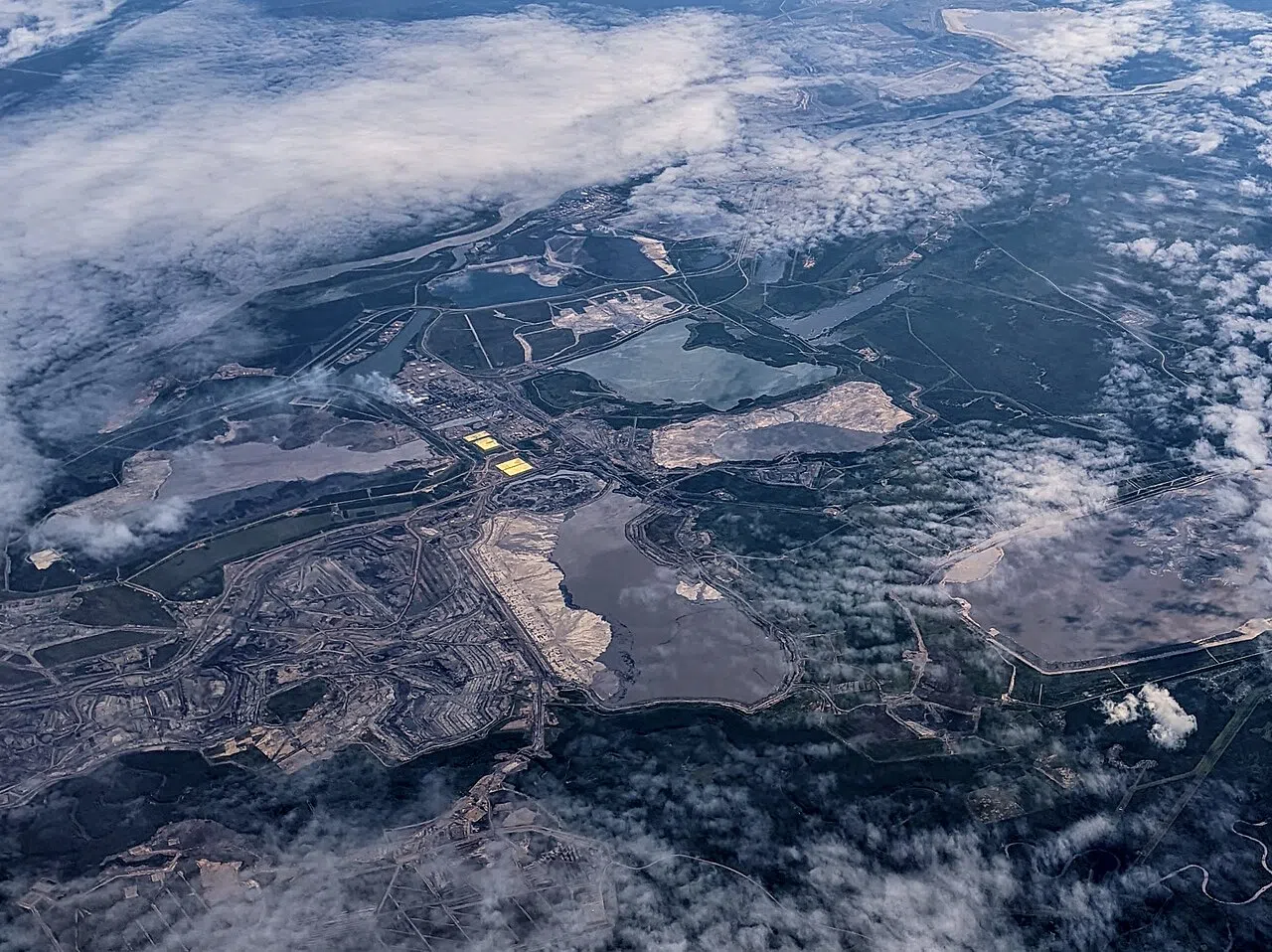
Dicklyon, CC BY-SA 4.0 , via Wikimedia Commons
OTTAWA — Strengthening industrial carbon pricing in line with a federal-provincial agreement would have only a minimal impact on the cost of producing oil from Alberta’s oilsands, according to new research from the left wing Canadian Climate Institute.
The institute said analysis of project-level compliance costs found oilsands producers would pay on average less than 50 cents per barrel by 2030 if carbon credit prices rise to $130 per tonne.
The estimate compares with about nine cents per barrel today.
Researchers said the added cost would represent less than one per cent of the value of a barrel of oil, based on a Western Canadian Select price of about $100 per barrel.
The analysis is part of the institute’s “440 Megatonnes” project, which also released an online calculator allowing users to estimate how individual oilsands projects could be affected by current and future industrial carbon pricing.
The institute said industrial carbon pricing programs such as Alberta’s Technology Innovation and Emissions Reduction system are designed to limit costs for emissions-intensive industries while encouraging reductions.
Under those systems, companies pay carbon costs only on emissions exceeding a performance benchmark and can generate credits if emissions fall below the threshold.
The research also examined nearly two decades of provincial trade data and found no statistically significant evidence that industrial carbon pricing has reduced exports from Canada’s oilsands sector.
The institute said maintaining the planned increase in carbon credit prices to $130 per tonne by 2030 would provide policy certainty while helping reduce emissions across industrial sectors.


Comments