


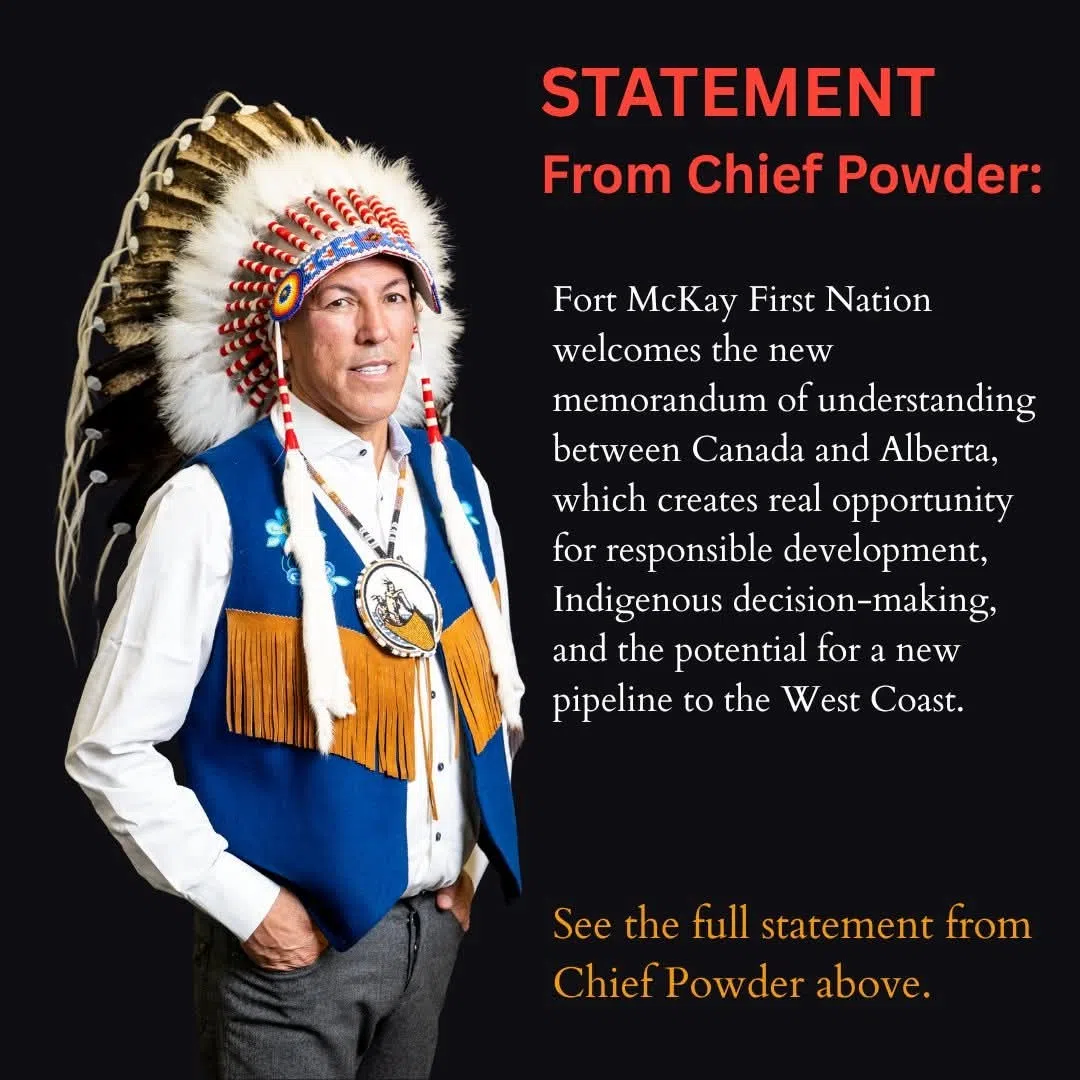
Chief Raymond Powder of the Fort McKay First Nation post on social media
FORT MCKAY, AB — Fort McKay First Nation says a new memorandum of understanding between Ottawa and Alberta signals long-awaited progress on how major energy projects are planned, approved and shared across the country.
Chief Raymond Powder said the agreement reflects a renewed willingness from both governments to support responsible development that includes Indigenous decision-making and ownership. He said the deal shows “Canada is finally prepared to match its ambitions with action” by creating conditions for major projects that include Indigenous partners from the ground up.
Powder said the agreement also opens the door for a new bitumen pipeline to the West Coast, paired with the Pathways Alliance project and a more efficient approval process that recognizes Indigenous participation. He said the memorandum gives Fort McKay “a genuine seat at the table where decisions are made, not just where they are discussed,” calling it a meaningful shift in federal and provincial policy.
Alberta Energy Minister Brian Jean welcomed that involvement, saying partnering with Indigenous communities on energy projects remains a priority for the province. “We have seen the benefits that can come to communities with the example of Fort McKay,” he said. Jean said AIOC-type partnerships are central to economic reconciliation and to getting major projects built “in Alberta and across Canada.” He added that any future pipeline will succeed “through a partnership between Indigenous communities and private industry to the benefit of all Canadians.”
Fort McKay First Nation plans to take a leading role as what Powder called a practical, solutions-focused partner. He said the Nation will bring its experience in monitoring and environmental oversight, push for early and continuous consultation, and explore co-ownership models that create long-term revenue for housing, education, cultural programs, health services and youth opportunities. The opportunity for Indigenous equity in major projects is “not symbolic, but transformational,” he said.
Powder said Fort McKay is prepared to contribute decades of expertise in stewardship and oversight, adding that “responsible development is something our Nation understands because we have lived in the heart of this industry for generations.”
He said the Nation also intends to support workforce development so members can access training and careers tied to pipeline construction and related projects. Fort McKay will work with neighbouring Nations to share information, strengthen relationships and ensure the region benefits from the opportunities ahead.
Powder said the national economic potential is significant. He pointed to a new pipeline with access to Asian markets, next-generation technology and streamlined regulation as steps that could improve competitiveness, create thousands of jobs and boost economic activity. He said the Nation views the agreement as a chance to help Canada strengthen its position in global energy markets, calling it “about building a future where our communities and our country benefit together.”
He said the memorandum signals that Indigenous voices are expected at the table as partners, owners and contributors. Powder added that Fort McKay First Nation is prepared for the work ahead and will approach it with clarity and respect for Treaty rights.
“Our goal is progress that strengthens our people, respects our rights and supports a stronger future for our Nation, Alberta and Canada,” he said.


Comments